Showing posts with label Environmental Science. Show all posts

Thursday, April 12, 2012

RESEARCH STUDENTSHIP (TEAGASC WALSH FELLOWSHIP)

A research studentship is available working with Dr Catherin Coxon of the School of Natural Sciences at Trinity College Dublin. The studentship (known as a Walsh Fellowship) is tenable at Trinity College Dublin in association with Teagasc, Johnstown Castle (Wexford, Ireland)


NITROGEN ATTENUATION ALONG DELIVERY PATHWAYS IN AGRICULTURAL CATCHMENTS

This project aims to investigate nitrogen transfer and attenuation within intensively managed agricultural river catchments, so that current mitigation strategies and response times can be evaluated. The project will involve fieldwork at several sites in southern Ireland and laboratory analytical work at Teagasc Johnstown Castle and is carried out within the frame work of the Agricultural Catchments Programme. The objectives include exploration of temporal groundwater fluxes within the landscape, determination of nitrogen transfer via groundwater to streams, investigation of N attenuation in the hyporheic zone and quantification of a nitrogen balance including nitrous oxide emissions.

Applicants should have a good primary degree (II1 or I) or a M.Sc. in an appropriate discipline (Environmental Science, Earth Science, Agricultural Science, Hydrology / Hydrogeology etc.). A full driving licence is also required.  The position is funded by a Teagasc Walsh Fellowship; value €21,000 per annum, to cover postgraduate stipend and tuition fees. (Note: tuition fees for European Union residents are currently €6,085 per annum). The project will start in September 2012. The funding is for a four year structured Ph.D. project, to be completed by end of August 2016.

 The project student will receive initial training based mainly at Trinity College Dublin for the first few months, but for most of the project they will be based at the Teagasc Johnstown Castle Environmental Research Centre, Co. Wexford. They will be registered as a full time research student in the School of Natural Sciences, Trinity College Dublin (www.naturalscience.tcd.ie), working under the supervision of Dr. Catherine Coxon. The student will work in association with Teagasc Agricultural Catchments Programme personnel (www.teagasc.ie/agcatchments) and the primary Teagasc supervisor will be Dr. Per-Erik Mellander.

Applicants should submit (a) a curriculum vitae, detailing their qualifications and experience, (b) proof of driving licence, (c) a covering letter explaining why they wish to pursue this project, and (d) contact details for two referees. This should be sent to: Dr. Catherine Coxon, Department of Geology, School of Natural Sciences, Trinity College Dublin, Dublin 2, Ireland. E-mail: cecoxon@tcd.ie Phone +353-1-8962235
Closing date for applications: May 18th, 2012.

Tuesday, August 30, 2011

UK river quality continues to improve


The official figures for UK rivers have shown a significant improvement in overall quality with many famously polluted rivers now of good quality. There is no doubt that the new Water Framework Directive has given that extra impetus for the improvement with all agencies, landowners and other stakeholders working closely together to achieve good quality status or higher in all surface waters by 2015. Link In contrast, Irish rivers struggle to meet EU targets with EPA figures not revealing the true extent of the problem.

Monday, August 29, 2011

Otter populations in England make a comeback

The Otter (Lutra lutra)  almost become extinct in England from the mid 1950’s through to the early 1970’s due to river pollution and in particular organochlorine pesticides.  This month Environment Agency announced that the otter is now to once again to be found throughout England with 59% of traditional otter sites surveyed (2,940) now colonized compared to just 6% in 1979. Rivers in England are now the cleanest they have been for the past 20 years and with fish stocks improving recolonization of rivers by otters and salmon has been seen as the last step in the restoration of England’s rivers.  Link Otters are also very common on many Irish rivers, but as numbers of otters increase there are concerns from many fishing clubs that their restocking and restoration work is simply filling the otter’s larder!  This has led to some conflict between conservation and angling organizations.

Tuesday, August 23, 2011

World Water Week


Each year the Stockholm International Water Institute (SIWI) hosts World Water in Stockholm. Since 2009 the massive event which consists of a large range of seminars, workshops, lectures and visits has been dealing with the issues around Responding to Global Changes. This year the main theme is Water in an Urbanising World. You can be involved by using the extensive official website. Link

Thursday, August 18, 2011

Discarded larger cans and sewage fungus


Sewage fungus forms macroscopic growths of bacteria
and fungus that coat the entire substrate of rivers
affected by severe organic pollution
 I was doubly interested in a recent newspaper article this month concerning a company owned by Heineken UK.  It was recently fined for polluting a tributary of the River Leadon in Herefordshire. Leachate from apple waste had accidently found its way into the stream during site work causing a sewage fungus outbreak and also a fish kill.  The reason why this story caught my interest is that for many years I worked on sewage fungus here in Ireland, but over the years it has become a very rare site here in Ireland and also I suspect in England…which is a good thing unless it  happens  to be your research area!  The microbial ecology of sewage fungus is quite fascinating being largely comprised of filamentous heterotrophic bacteria, although there are three filamentous fungi which occasionally form part of the community.  The other reason why the story interested me was that I was sampling a section of river today and the bank was covered with discarded cans of Heineken larger, obviously a remnant of some summer party.  So I have made a new resolution and that is always to pack one plastic sack and a litter picker along with my sampling gear and make sure that at every site I visit I clear up any bank side litter before I leave and try to bring a full sack of litter/rubbish back each trip and recycle what I can. 

Wednesday, August 10, 2011

SODIS Solar drinking water disinfection


Transparent PET bottles exposed to
sunlight to passivelytreat drinking water.
Copyright CNN
 SODIS is short for solar water disinfection and is perhaps one of the simplest and safest ways of treating water in developing countries. Transparent plastic bottles (PET) are filled with settled water and left in the sun for 6 hours. A mixture of temperature and UV-A rays inactivate viruses, bacteria and protozoa making the water safe for consumption. It also works in cloudy conditions although it is recommended that the bottles are exposed to light for 2 consecutive days. 5 million people rely on this method for safe water. Find out more about the SODIS project and how you can help. Link

Tuesday, August 9, 2011

Successful PhD candidate

Congratulations to our colleague Donata Dubber for successfully defending her PhD thesis ‘The effect of anoxia and anaerobia on protozoan communities in activated sludge operation.’ Dr Dubber has already published a number of research papers on her study including
  • Enumeration of protozoan ciliates in activated sludge: Determination of replicate number using probability Water Research 43, 3443-52;
  • Replacement of chemical oxygen demand (COD) with total organic carbon (TOC) for monitoring wastewater treatment performance to minimize disposal of toxic analytical waste J. Journal of Environmental Science and Health Part A , 45, 1595-1600;
  • The effect of anoxia and anaerobia on ciliate community in biological nutrient removal systems using laboratory-scale sequencing batch reactors (SBRs). Water Research, 45, 2213-26;
  • The influence of fundamental design parameters on ciliates community structure in Irish activated sludge systems. European Journal of Protistology, In press.

Friday, June 3, 2011

Dublin Faces Possible Water Shortages

Dublin City Council have issued advanced notice that their reservoirs in the Wicklow mountains are rapidly falling due to a very dry March and April resulting. With little or no water replenishing stocks reserves now stand at 120 days, rather than the usual 178 days normally expected at this time of year. This means that if dry weather continues then restrictions will have to be implemented both in the City and throughout the Greater Dublin area. The cut off point is 80days storage at which restrictions will be put into place. Consumers are asked to conserve supplies, especially in relation to using water for the garden and washing vehicles etc.

Monday, May 30, 2011

Review of the Environmental Protection Agency

The long awaited review of the Irish Environmental Protection Agency (EPA) has been published today. Although some 58 recommendations were made some concerns about the review have been raised.   For further information use the link.

Thursday, May 19, 2011

SFI Postdoctoral Four-Year Early Career Grants

Science Foundation Ireland (SFI) has recently launched the Starting Investigator Research Grant (SIRG) which is aimed at funding excellent early-career-stage investigators (postdoctoral) to carry out independent research in the fields of science and engineering that underpin biotechnology, information and communications technology, and sustainable energy and energy-efficient technologies. Funding of up to €400,000 direct costs over a four year period is provided to successful applicants, to include the Starting Investigator’s salary and funding for a postgraduate student . A mentor is required to support the necessary support and infrastructure to the project. Full information can be accessed here.
The Water Technology Research Group would like to encourage applications from any nationality to apply for one of these grants. Each institution including Trinity College Dublin is required to supply a list of approved (pre-selected) candidates to SFI who make the final selection. An internal deadline of 15th June has been set for online applications, then a short-listing will be coordinated by the Dean of Research in association with the Faculty Deans. Time is short, so if you are interested please contact either Professor Nick Gray or the TCD research office.

Thursday, April 7, 2011

MSc Students Visit Swords STW

Francis O'Hagan and the MSc
students examining the final effluent
The students of the MSc course in Environmental Science were given VIP treatment when they visited Swords Sewage Treatment Works operated by Fingal County Council.  We were shown around by plant supervisor Mr Francis O’Hagan who gave a very useful insight into the management and operation of a modern wastewater treatment plant. The incredibly low odour at the plant coupled with an excellent final effluent is a huge credit to all the staff of this local authority run plant.

Saturday, April 2, 2011

Environ 2011

UCC main quadrangle
Copyright UCC
The 21st Irish Environmental Researchers’ Colloquium is being held in University College Cork (UCC) from Wednesday, April 6th to Friday April 8th, 2011. With over 300 researchers and delegates from a wide variety of scientific and engineering disciplines in attendance, this is Ireland’s largest annual environmental event. Postgraduate researchers from throughout Ireland share their research offering a unique opportunity to experience the latest ideas in environmental science and technology. Most of the researchers from the Water Technology Research Group will be in attendance at this year’s colloquium. List of presentations

Tuesday, March 29, 2011

MSc Environmental Sciences

The MSc Environmental Sciences students are spending three weeks with me doing a crash course in hydrobiology.  The 13 students are currently doing freshwater monitoring and are shown here on their third freshwater site visit.

Tuesday, March 22, 2011

Today is Word Water Day!


The theme of this year’s World Water Day is ‘Water for cities: responding to the urban challenge’.

Sunday, March 20, 2011

New PhD studentship


A new four year PhD studentship is available with the Water Technology Research Group from September 1st 2011 funded by the Irish Government under the National Development Plan 2007-2013. The project explores the question Can submerged aquatic macrophytes be used under temperate conditions to provide a low-carbon sustainable treatment solution for a range of conventional and problematic wastewaters? The project will be examining a range of native and invasive species, including Lagarosiphon major. Further details can be found here.

Monday, March 14, 2011

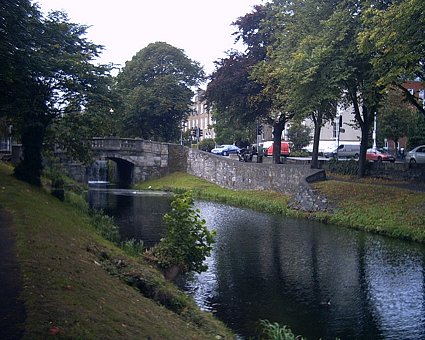
Swan mortalities on the Grand Canal

Seventeen dead swans were recovered from the Grand Canal in Dublin  between the 9th and 10th of March and a further ten seriously ill swans removed from between Portobello Harbour and the Suir Road Bridge. Initially it was thought this was due to Avian flu but this has subsequently been ruled out with experts now believing the cause to be a bacterial disease, most likely botulism. However, what is of concern is that this is close to the area currently being dredged and that dead fish have also been reported. The dead animals are undergoing tests at the State Laboratory although confirmation of the cause of death is not expected until the end of the month. Swans are particularly vulnerable to sudden changes in water quality and contaminated food resources, especially in urban locations on canals where they do not find it easy to move from one enclosed stretch to another. In my opinion a possible link to the dredging activity does need to be positively ruled out so that this important maintenance work can continue in future years with any necessary safeguards in place.

Sunday, March 13, 2011

Word Water Day 22nd March 2011


The theme of this year’s World Water Day is ‘Water for cities: responding to the urban challenge’. The aim is to focus attention of all stakeholders to the challenge of urban water management to deal with the impact of rapid urban population growth, industrialization and uncertainties caused by climate change, conflicts and natural disasters on urban water systems. Link

Saturday, March 12, 2011

Dredging continues along the Grand Canal in Dublin


Grand Canal
Copyright irishkc.com
Waterways Ireland is continuing to dredge sections of the Grand Canal in the City Centre to keep it navigable for large boats. For those of you who travel on the Luas you will notice that sections are currently devoid of water as sediment and rubbish are cleared. This means the section between Lock C4 (Baggot Street) and Lock 1 (Suir Road) will not be navigatable. This work will be completed by April. Although the National Parks and Wildlife Service are advising the company on how to minimize damage to the wildlife of the canal, much of the freshwater flora and fauna will simply be removed or destroyed by the work. The Canal is a unique reservoir for Irish freshwater biodiversity but the periodic dredging work is unavoidable to prevent the canal from completely silting up. Further details.

Thursday, March 10, 2011

Massive investment for flood protection in England

The Department for Environment Food and Rural Affairs (defra) announced 39 new flood and coastal defence projects throughout England last month, 21 one of these are to reduce to risk of flooding protecting over 13,000 households. This is part of an enormous programme involving nearly 300 projects which are managing the risk of flooding costing £521 million in the coming year. Full datails of the projects can be accessed here.

Saturday, March 5, 2011

Science Spin March 2011

The March 2011 edition of Science Spin, Ireland's own Science magazine, is now available. Link