Showing posts with label Freshwater. Show all posts

Friday, July 13, 2012

Continuing Rainfall Impacting on Wildlife


I remember quite vividly in May of this year the gentleman from the Environment Agency in the UK stating that it would have to rain every day this summer for water resources to return to normal. Well records apart it has rained every day this summer and yes indeed water resources are looking fairly good. In fact there is water coming from springs I never knew existed where I live. But the rainfall has led to quite extraordinary conditions for wildlife from butterflies to badgers.

Ground nesting birds and wildfowl have been particularly hard hit, especially in and along the River Shannon, Ireland’s largest river, with many of the numerous small islands now under water. Kathryn Finney from Birdwatch Ireland has a fascinating blog and has been recording the problems due to this exceptionally wet summer and has some excellent images of the problems being caused by the high water levels.


Thursday, April 12, 2012

RESEARCH STUDENTSHIP (TEAGASC WALSH FELLOWSHIP)

A research studentship is available working with Dr Catherin Coxon of the School of Natural Sciences at Trinity College Dublin. The studentship (known as a Walsh Fellowship) is tenable at Trinity College Dublin in association with Teagasc, Johnstown Castle (Wexford, Ireland)


NITROGEN ATTENUATION ALONG DELIVERY PATHWAYS IN AGRICULTURAL CATCHMENTS

This project aims to investigate nitrogen transfer and attenuation within intensively managed agricultural river catchments, so that current mitigation strategies and response times can be evaluated. The project will involve fieldwork at several sites in southern Ireland and laboratory analytical work at Teagasc Johnstown Castle and is carried out within the frame work of the Agricultural Catchments Programme. The objectives include exploration of temporal groundwater fluxes within the landscape, determination of nitrogen transfer via groundwater to streams, investigation of N attenuation in the hyporheic zone and quantification of a nitrogen balance including nitrous oxide emissions.

Applicants should have a good primary degree (II1 or I) or a M.Sc. in an appropriate discipline (Environmental Science, Earth Science, Agricultural Science, Hydrology / Hydrogeology etc.). A full driving licence is also required.  The position is funded by a Teagasc Walsh Fellowship; value €21,000 per annum, to cover postgraduate stipend and tuition fees. (Note: tuition fees for European Union residents are currently €6,085 per annum). The project will start in September 2012. The funding is for a four year structured Ph.D. project, to be completed by end of August 2016.

 The project student will receive initial training based mainly at Trinity College Dublin for the first few months, but for most of the project they will be based at the Teagasc Johnstown Castle Environmental Research Centre, Co. Wexford. They will be registered as a full time research student in the School of Natural Sciences, Trinity College Dublin (www.naturalscience.tcd.ie), working under the supervision of Dr. Catherine Coxon. The student will work in association with Teagasc Agricultural Catchments Programme personnel (www.teagasc.ie/agcatchments) and the primary Teagasc supervisor will be Dr. Per-Erik Mellander.

Applicants should submit (a) a curriculum vitae, detailing their qualifications and experience, (b) proof of driving licence, (c) a covering letter explaining why they wish to pursue this project, and (d) contact details for two referees. This should be sent to: Dr. Catherine Coxon, Department of Geology, School of Natural Sciences, Trinity College Dublin, Dublin 2, Ireland. E-mail: cecoxon@tcd.ie Phone +353-1-8962235
Closing date for applications: May 18th, 2012.

Thursday, April 5, 2012

Red List highlights six Irish freshwater species at risk of extinction


Pollan
Copyright www.loughallenbasin.com/pollan.html

Six of Ireland’s 15 native fish species and one of its three amphibians have been included in the revised Red Data List of Irish Amphibians, Reptiles and Freshwater Fish published by the National Parks and Wildlife Service Link. The European eel (Anguilla anguilla) is listed as Critically Endangered and five more fish species (pollan, Artic char, twaite shad, Killarney shad and Atlantic salmon) were found to be Vulnerable. The Natterjack Toad (Epidalea calamita), is classified as Endangered.

For the first time, the status of naturalised non-native fish is discussed. Two of these, dace and chub, have been identified as invasive requiring management. The report sets out management polices and actions for the preservation of Irish Amphibians, Reptiles and Freshwater Fish.


Sunday, November 20, 2011

Phosphates- Latest CEEP Newsletter


The Centre European d’Etudes des Polyphosphates (CEEP) is the major centre for the polyphosphate industry which carries out work on all aspects of phosphates especially recovery and recycling of phosphates, sewage treatment ad eutrophication. They have a very extensive research and information base available through their website. You can also add your name to their free newsletter which outlines current R&D in the area. Their latest newsletter (No.84) is now available. This edition and access to all the previous editions going back to 1990 are available at Link.

Thursday, August 18, 2011

Discarded larger cans and sewage fungus


Sewage fungus forms macroscopic growths of bacteria
and fungus that coat the entire substrate of rivers
affected by severe organic pollution
 I was doubly interested in a recent newspaper article this month concerning a company owned by Heineken UK.  It was recently fined for polluting a tributary of the River Leadon in Herefordshire. Leachate from apple waste had accidently found its way into the stream during site work causing a sewage fungus outbreak and also a fish kill.  The reason why this story caught my interest is that for many years I worked on sewage fungus here in Ireland, but over the years it has become a very rare site here in Ireland and also I suspect in England…which is a good thing unless it  happens  to be your research area!  The microbial ecology of sewage fungus is quite fascinating being largely comprised of filamentous heterotrophic bacteria, although there are three filamentous fungi which occasionally form part of the community.  The other reason why the story interested me was that I was sampling a section of river today and the bank was covered with discarded cans of Heineken larger, obviously a remnant of some summer party.  So I have made a new resolution and that is always to pack one plastic sack and a litter picker along with my sampling gear and make sure that at every site I visit I clear up any bank side litter before I leave and try to bring a full sack of litter/rubbish back each trip and recycle what I can. 

Sunday, March 20, 2011

New PhD studentship


A new four year PhD studentship is available with the Water Technology Research Group from September 1st 2011 funded by the Irish Government under the National Development Plan 2007-2013. The project explores the question Can submerged aquatic macrophytes be used under temperate conditions to provide a low-carbon sustainable treatment solution for a range of conventional and problematic wastewaters? The project will be examining a range of native and invasive species, including Lagarosiphon major. Further details can be found here.

Thursday, March 17, 2011

Fishing on the River Dodder

Happy Saint Patrick's Day
I was walking past a well known Fishing Tackle Shop in Dublin today and saw fishing permits for the River Dodder on sale. It is not a huge river but hugely popular for fishing which is controlled by the Dodder Anglers Club and also of course the riparian owners. The Club supplements the natural fish stocks annually by restocking with brown trout ranging from 4 -16 ounces with sea trout occurring at Ballsbridge. At €10 for adults and €5 for juniors it  really is a remarkably cheap permit, especially as the river flows through Greater and Central Dublin and this is where the best fishing is to be found. A useful introduction to the Dodder is the recent catchment flood report commissioned by Dublin City Council. Link

Monday, March 14, 2011

Swan mortalities on the Grand Canal

Seventeen dead swans were recovered from the Grand Canal in Dublin  between the 9th and 10th of March and a further ten seriously ill swans removed from between Portobello Harbour and the Suir Road Bridge. Initially it was thought this was due to Avian flu but this has subsequently been ruled out with experts now believing the cause to be a bacterial disease, most likely botulism. However, what is of concern is that this is close to the area currently being dredged and that dead fish have also been reported. The dead animals are undergoing tests at the State Laboratory although confirmation of the cause of death is not expected until the end of the month. Swans are particularly vulnerable to sudden changes in water quality and contaminated food resources, especially in urban locations on canals where they do not find it easy to move from one enclosed stretch to another. In my opinion a possible link to the dredging activity does need to be positively ruled out so that this important maintenance work can continue in future years with any necessary safeguards in place.

Saturday, March 12, 2011

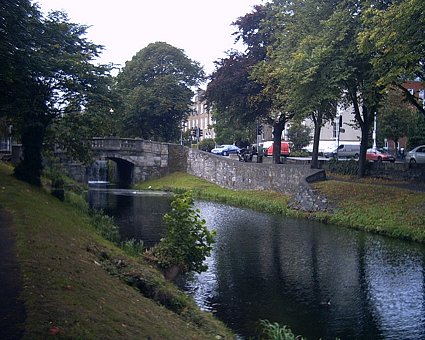
Dredging continues along the Grand Canal in Dublin


Grand Canal
Copyright irishkc.com
Waterways Ireland is continuing to dredge sections of the Grand Canal in the City Centre to keep it navigable for large boats. For those of you who travel on the Luas you will notice that sections are currently devoid of water as sediment and rubbish are cleared. This means the section between Lock C4 (Baggot Street) and Lock 1 (Suir Road) will not be navigatable. This work will be completed by April. Although the National Parks and Wildlife Service are advising the company on how to minimize damage to the wildlife of the canal, much of the freshwater flora and fauna will simply be removed or destroyed by the work. The Canal is a unique reservoir for Irish freshwater biodiversity but the periodic dredging work is unavoidable to prevent the canal from completely silting up. Further details.

Wednesday, March 2, 2011

Water Quality in Ireland 2007-2009

The season for National reports continues with the latest  report on the surveillance programme of Irish water quality dealing with rivers, lakes, estuaries and groundwaters has been published by the Environmental Protection Agency. The report Water Quality in Ireland 2007-2009 can be downloaded from the EPA website.

The programme monitors some 13,118 km of river channel comprising 1,700 rivers, as well as 222 lakes, 89 estuarine and coastal sites and 211 groundwater monitoring stations. The problem with all such surveillance programmes is that not all water bodies can be included so there are many gaps in what is being monitored. However, having said that, the overall conclusion is that water quality in Ireland is being maintained but according to the EPA themselves the quality of Irish water quality remains only just above the European average which is disappointing. The reports shows that 70% of river channel is of good quality status in accordance with the Water Framework Directive although the remainder are polluted to varying degrees. Overall, 85% of groundwaters were also of good status and 90% of lake area is in a satisfactory condition. The EPA remain committed to improving water quality in Ireland.

Wednesday, February 16, 2011

TCD Avoca Mines/River Publications

Several people have asked for a list of the Internal Reports that we have published on the Avova Mines and its impact on the Avoca River.  These were done mainly in the 1990's with more recent research published in journals.  There is also significant work availble in thesis format.  Below is a list of the internal reports that are available.  There are two reports which were Governmnet Reports that are confidential and so are not included both dealing with plans to rehabilitate the mines.

  • Sullivan, M. and Gray, N.F. (1992) An evaluation of the fisheries potential of the Avoca catchment. Technical Report 9, Water Technology Research, Dublin, 47pp.
  • Gray, N.F. (1995) Flow calculation in the River Avoca: flow calculation and flow data. Technical Report: 10, Water Technology Research, Trinity College, University of Dublin, Dublin. (ISBN 1-872220-11-8) Revised July, 1995.
  • Gray, N.F. and Doyle, T.M. (1995) Characterisation of acid mine drainage generating sites. Technical Report: 11, Water Technology Research, Trinity College, University of Dublin, Dublin. (ISBN 1-872220-12-6)
  • Gray, N.F. (1995) Water quality of the surface waters at Avoca Mines and the Avoca River: Intensive sampling period May to October, 1994 (Interim report). Technical Report: 12, Water Technology Research, Trinity College, University of Dublin, Dublin. (ISBN 1-872220-13-4)
  • Gray, N.F. (1995) Main adit flow and metal discharge rates. Technical Report: 13, Water Technology Research, Trinity College, University of Dublin, Dublin. (ISBN 1-872220-14-2)
  • Gray, N.F. (1995) Field assessment of acid mine drainage contamination in surface waters. Technical Report: 14, Water Technology Research, Trinity College, University of Dublin, Dublin. (ISBN 1-872220-15-0)
  • Kilroy, A. and Gray, N.F. (1994) A review of treatability, toxicity and biodegradability test methods. Technical Report: 15, Water Technology Research, Trinity College, University of Dublin, Dublin. (ISBN 1-872220-16-9)
  • Gray, N.F. (1995) Influence of secondary sulphate mineral formation on the impact of acid mine drainage to surface waters. Technical Report: 16, Water Technology Research, Trinity College, University of Dublin, Dublin. (ISBN 1-872220-17-7)
  • Byrne, C. and Gray, N.F. (1995 ) Environmental impact of acid mine drainage on the Avoca River: Effects of habitat types on biological monitoring of the macro invertebrate fauna. Technical Report: 17, Water Technology Research, Trinity College, University of Dublin, Dublin. (ISBN 1-872220-18-5
  • Byrne, C. and Gray, N.F. (1995) Environmental impact of acid mine drainage on the Avoca River: Acute toxicity experiments in the field using macro invertebrates. Technical Report: 18, Water Technology Research, Trinity College, University of Dublin, Dublin. (ISBN 1-872220-19-3)
  • Herr, C. and Gray, N.F. (1995) Environmental impact of acid mine drainage on the Avoca River: Metal fluxes in water and sediment. Part I Introduction to metal accumulation in riverine sediments. Technical Report: 19, Water Technology Research, Trinity College, University of Dublin, Dublin. (ISBN 1-872220-20-7).
  • Herr, C. and Gray, N.F. (1995) Environmental impact of acid mine drainage on the Avoca River: Metal fluxes in water and sediment. Part II Metal contamination of riverine sediments. Technical Report: 20, Water Technology Research, Trinity College, University of Dublin, Dublin. (ISBN 1-872220-21-5).
  • Herr, C. and Gray, N.F. (1995) Environmental impact of acid mine drainage on the Avoca River: Metal fluxes in water and sediment. Part III Metals in water and suspended particulate matter.Technical Report: 21, Water Technology Research, Trinity College, University of Dublin, Dublin. (ISBN 1-872220-22-3).
  • Gray, N.F. (1995) An objective index for the assessment of the contamination of surface and ground waters by acid mine drainage. Technical Report: 22, Water Technology Research, Trinity College, University of Dublin, Dublin. (ISBN 1-872220-23-1)
  • Gray, N.F. (1995) A substrate classification index for the visual assessment of the impact of acid mine drainage in lotic systems. Technical Report: 24, Water Technology Research, Trinity College, University of Dublin, Dublin. (ISBN 1-872220-25-8)
  • Doyle, T.M. and Gray, N.F. (1995) Protocol for monitoring and predicting the impact of acid mine drainage: Designing and setting up a geographical information system (GIS). Technical Report: 25, Water Technology Research, Trinity College, University of Dublin, Dublin. (ISBN 1-872220-26-6
  • Sullivan, M., Gray, N.F. and O'Neill, C. (1995) Synoptic overview of the Avoca-Avonmore catchment and the Avoca Mines. Technical Report: 26, Water Technology Research, Trinity College, University of Dublin, Dublin. (ISBN 1-872220-27-4)
  • Gray, N.F. and Sullivan, M. (1995) The environmental Impact of acid mine drainage. Technical Report: 27, Water Technology Research, Trinity College, University of Dublin, Dublin. (ISBN 1-872220-28-2)
  • Herr, C. and Gray, N.F. (1995) Protocol for monitoring and predicting the impact of acid mine drainage: sediment sampling. Technical Report: 28, Water Technology Research, Trinity College, University of Dublin, Dublin. (ISBN 1-872220-29-0) 
  • Gray, N.F. (1995) Procedure for the estimation of the impact of acid mine drainage to surface waters. Technical Report: 29, Water Technology Research, Trinity College, University of Dublin, Dublin. (ISBN 1-872220-30-4)
  • O'Neill, C., Herr C. and Gray, N.F. (1995) A survey of soil and vegetation in the area surrounding the East Avoca Mine, Co. Wicklow. Technical Report: 31, Water Technology Research, Trinity College, University of Dublin, Dublin. (ISBN 1-872220-32-0)
  • Gray, N.F. (1995) Biorehabilitation of the acid mine drainage phenomenon by accelerated bioleaching of mine waste: Executive summary of the work done at Trinity College, Dublin. Technical Report: 33, Water Technology Research, Trinity College, University of Dublin, Dublin. (ISBN 1-872220-34-7).
  • Herr, C. and Gray, N.F. (1995) Seasonal variation of metal contamination in riverine sediments of the Avoca River with regard to seasonal differences. Technical Report: 34, Water Technology Research, Trinity College, University of Dublin, Dublin. (ISBN 1-872220-35-5).

Thursday, February 3, 2011

American Mink in the River Dodder

Yesterday students from my undergraduate freshwater biology course and myself were out surveying the River Dodder in the heart of suburban Dublin. To our surprise we were able to observe mature American Mink patrolling the opposite bank completely at home and oblivious to all the activity going on. I have very rarely seen mink in the wild and was surprised to see it so well adapted to its urban environment. This voracious predator has had devastating impact on river wildlife, especially water voles, which are now classed as endangered, as well as wildfowl (e.g. moorhens, coots, widgeon and teal) and of course fish. It is perhaps our most problematic invasive species. This sighting comes at a time when the University of Aberdeen is leading a major eradication scheme in a number of Scottish rivers. So far 10,000 sq km of land in north-east Scotland has been cleared of mink. Below is an excellent video from the BBC of biologist Jamie Urquhart (River Don Trust) showing science reporter Rebecca Morelle how the mink are caught.

Tuesday, January 18, 2011

Reminder: TCD Postgraduate Open Day


Trinity College Dublin
copyright Tigroney


Just to remind you that members of the Water Technology Research Group will be at the School of Natural Sciences stand at this year's Postgraduate Open Day on Thursday, 27 January 2011 from 4pm - 7pm in the historic Exam Hall in Trinity College Dublin. All the schools and disciplines will be represented and you will have the chance to discuss postgraduate opportunities.


Wednesday, January 12, 2011

IRCSET PhD Scholarships 2011

Irish Research Council for Science, Engineering and Technology (IRCSET) ‘EMBARK’ Initiative and the Enterprise Partnership Scheme (EPS) offer opportunities for suitably qualified individuals to pursue a postgraduate degree by research. The Scheme supports basic research in the broad areas of Science, Engineering and Technology. The online application system opens on Wednesday 12th January 2011 for individuals hoping to begin postgraduate research in the Republic of Ireland in September, 2011. The strict deadline for applicants to submit applications is Wednesday 16th February, 2011. Link  Those interested in applying for a PhD with the Water Technology Group or within the Centre for the Environment should contact Nick Gray in the first instance.

Thursday, January 6, 2011

Annual Meeting of Irish Freshwater Biologists 2011

The 2011 Annual Meeting of Irish Freshwater Biologists will focus on ‘New Methodologies in Freshwater Biological Research’ and will be held in the Medical Biology Centre, Queens University, Belfast on Saturday, 5th of March 2011.  If you’re interested in attending please contact Maria Walsh

If you’d like to give a presentation on your research, please email a title Maria by the 17th of January. There will be a €15 fee to cover lunch and coffee.

Sunday, December 26, 2010

Persistent organic pollutants (POPs)

Persistent organic pollutants (POPs) are man-made compounds that can stay in the environment for many years and can accumulate in fatty tissue. The Stockholm Convention in 2005 added nine more compounds to the “dirty dozen”. These POPs include pesticides which are organochlorine compounds such as aldrin, chlordane, DDT, dieldrin, endrin, heptachlor, hexachlorobenzene, mirex, alpha and beta hexachlorocyclohexane (also by-products), chlordecone, and lindane. Industrial chemicals such as PCBs, hexachlorobenzene (also a pesticide), hexabromobiphenyl, hexa- and heptabromodiphenyl ether (commercial octabromodiphenyl ether), pentachlorobenzene, perfluorooctane sulfonic acid and its salts perfluorooctane sulfonyl fluoride, tetra- and pentabromodiphenyl ether (commercial pentabromodiphenyl ether), and unintentional by- products compounds: polychlorinated dioxins and furans. These highly toxic substances are released into the environment though several human activities and travel long distances via air and water. The total distribution of POPs concentrations in water around the world is unknown. For that reason, Dr. Lorena M Rios of the Department of Natural Sciences, University of Wisconsin-Superior, is guest editing a special edition of the on-line journal Water and has issued a call for papers where you can share your research results of these POPs in water and related research in order to make available information about their global environment transport. Closing date 30th April, 2011.

Friday, December 24, 2010

The Cotswold Canals Partnership

Canals throughout Europe are being recognized as an important asset after 100 plus year of neglect.  The Cotswold Canals Partnership is in the process of restoring the Cotswold Canals i.e. the Stroud Water Navigation (12km) and the Thames and Severn Canal (46km). Once completed England’s two greatest rivers, the Thames and the Severn, will once again be connected after falling into disrepair almost seventy years ago.  The project website is full of engineering and conservation details, wonderful photographs documenting the work as it is being undertaken, and much more. Link

Friday, December 3, 2010

Postgraduate Research Opportunities - Update

We are approaching that time of year when increasing numbers are contacting College about the possibilities of doing postgraduate research towards either an MSc or PhD.

We are very happy to encourage prospective postgraduates to apply to the University to carry out research with the Water Technology Research Group. While we do not have any funded places available at the present time (these are widely advertised when they become available) we still encourage self-financing students and those who can obtain funding from their employer, home Institution and Government.

In the first instance please go to the link at our Graduate Studies Office and read all the terms and conditions that apply to potential applicants. You will notice that all applications are now on-line and are centralized for Ireland.  However, before making a formal application for a higher degree you should first discuss possible projects with us and funding implications. Please contact me at nfgray@tcd.ie.

Details of funding available within Ireland can be accessed at via the Graduate Studies Office website.