Showing posts with label Freshwater Ecology. Show all posts

Thursday, April 5, 2012

Red List highlights six Irish freshwater species at risk of extinction


Pollan
Copyright www.loughallenbasin.com/pollan.html

Six of Ireland’s 15 native fish species and one of its three amphibians have been included in the revised Red Data List of Irish Amphibians, Reptiles and Freshwater Fish published by the National Parks and Wildlife Service Link. The European eel (Anguilla anguilla) is listed as Critically Endangered and five more fish species (pollan, Artic char, twaite shad, Killarney shad and Atlantic salmon) were found to be Vulnerable. The Natterjack Toad (Epidalea calamita), is classified as Endangered.

For the first time, the status of naturalised non-native fish is discussed. Two of these, dace and chub, have been identified as invasive requiring management. The report sets out management polices and actions for the preservation of Irish Amphibians, Reptiles and Freshwater Fish.


Sunday, November 20, 2011

Phosphates- Latest CEEP Newsletter


The Centre European d’Etudes des Polyphosphates (CEEP) is the major centre for the polyphosphate industry which carries out work on all aspects of phosphates especially recovery and recycling of phosphates, sewage treatment ad eutrophication. They have a very extensive research and information base available through their website. You can also add your name to their free newsletter which outlines current R&D in the area. Their latest newsletter (No.84) is now available. This edition and access to all the previous editions going back to 1990 are available at Link.

Tuesday, August 30, 2011

UK river quality continues to improve


The official figures for UK rivers have shown a significant improvement in overall quality with many famously polluted rivers now of good quality. There is no doubt that the new Water Framework Directive has given that extra impetus for the improvement with all agencies, landowners and other stakeholders working closely together to achieve good quality status or higher in all surface waters by 2015. Link In contrast, Irish rivers struggle to meet EU targets with EPA figures not revealing the true extent of the problem.

Monday, August 29, 2011

Otter populations in England make a comeback

The Otter (Lutra lutra)  almost become extinct in England from the mid 1950’s through to the early 1970’s due to river pollution and in particular organochlorine pesticides.  This month Environment Agency announced that the otter is now to once again to be found throughout England with 59% of traditional otter sites surveyed (2,940) now colonized compared to just 6% in 1979. Rivers in England are now the cleanest they have been for the past 20 years and with fish stocks improving recolonization of rivers by otters and salmon has been seen as the last step in the restoration of England’s rivers.  Link Otters are also very common on many Irish rivers, but as numbers of otters increase there are concerns from many fishing clubs that their restocking and restoration work is simply filling the otter’s larder!  This has led to some conflict between conservation and angling organizations.

Tuesday, August 23, 2011

World Water Week


Each year the Stockholm International Water Institute (SIWI) hosts World Water in Stockholm. Since 2009 the massive event which consists of a large range of seminars, workshops, lectures and visits has been dealing with the issues around Responding to Global Changes. This year the main theme is Water in an Urbanising World. You can be involved by using the extensive official website. Link

Sunday, April 3, 2011

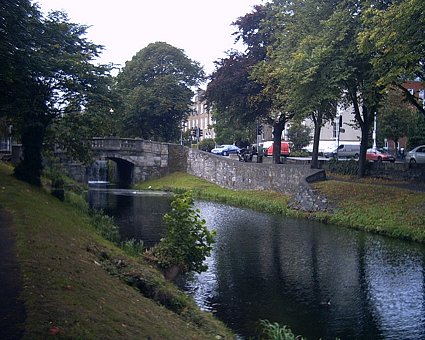
Weirs on the River Dodder

 There are some spectacular weirs on the River Dodder in Dublin but some of them as shown below are in urgent need of repair

Saturday, April 2, 2011

Environ 2011

UCC main quadrangle
Copyright UCC
The 21st Irish Environmental Researchers’ Colloquium is being held in University College Cork (UCC) from Wednesday, April 6th to Friday April 8th, 2011. With over 300 researchers and delegates from a wide variety of scientific and engineering disciplines in attendance, this is Ireland’s largest annual environmental event. Postgraduate researchers from throughout Ireland share their research offering a unique opportunity to experience the latest ideas in environmental science and technology. Most of the researchers from the Water Technology Research Group will be in attendance at this year’s colloquium. List of presentations

Sunday, March 20, 2011

New PhD studentship


A new four year PhD studentship is available with the Water Technology Research Group from September 1st 2011 funded by the Irish Government under the National Development Plan 2007-2013. The project explores the question Can submerged aquatic macrophytes be used under temperate conditions to provide a low-carbon sustainable treatment solution for a range of conventional and problematic wastewaters? The project will be examining a range of native and invasive species, including Lagarosiphon major. Further details can be found here.

Thursday, March 17, 2011

Fishing on the River Dodder

Happy Saint Patrick's Day
I was walking past a well known Fishing Tackle Shop in Dublin today and saw fishing permits for the River Dodder on sale. It is not a huge river but hugely popular for fishing which is controlled by the Dodder Anglers Club and also of course the riparian owners. The Club supplements the natural fish stocks annually by restocking with brown trout ranging from 4 -16 ounces with sea trout occurring at Ballsbridge. At €10 for adults and €5 for juniors it  really is a remarkably cheap permit, especially as the river flows through Greater and Central Dublin and this is where the best fishing is to be found. A useful introduction to the Dodder is the recent catchment flood report commissioned by Dublin City Council. Link

Saturday, March 12, 2011

Dredging continues along the Grand Canal in Dublin


Grand Canal
Copyright irishkc.com
Waterways Ireland is continuing to dredge sections of the Grand Canal in the City Centre to keep it navigable for large boats. For those of you who travel on the Luas you will notice that sections are currently devoid of water as sediment and rubbish are cleared. This means the section between Lock C4 (Baggot Street) and Lock 1 (Suir Road) will not be navigatable. This work will be completed by April. Although the National Parks and Wildlife Service are advising the company on how to minimize damage to the wildlife of the canal, much of the freshwater flora and fauna will simply be removed or destroyed by the work. The Canal is a unique reservoir for Irish freshwater biodiversity but the periodic dredging work is unavoidable to prevent the canal from completely silting up. Further details.

Wednesday, March 2, 2011

Water Quality in Ireland 2007-2009

The season for National reports continues with the latest  report on the surveillance programme of Irish water quality dealing with rivers, lakes, estuaries and groundwaters has been published by the Environmental Protection Agency. The report Water Quality in Ireland 2007-2009 can be downloaded from the EPA website.

The programme monitors some 13,118 km of river channel comprising 1,700 rivers, as well as 222 lakes, 89 estuarine and coastal sites and 211 groundwater monitoring stations. The problem with all such surveillance programmes is that not all water bodies can be included so there are many gaps in what is being monitored. However, having said that, the overall conclusion is that water quality in Ireland is being maintained but according to the EPA themselves the quality of Irish water quality remains only just above the European average which is disappointing. The reports shows that 70% of river channel is of good quality status in accordance with the Water Framework Directive although the remainder are polluted to varying degrees. Overall, 85% of groundwaters were also of good status and 90% of lake area is in a satisfactory condition. The EPA remain committed to improving water quality in Ireland.

Thursday, February 3, 2011

American Mink in the River Dodder

Yesterday students from my undergraduate freshwater biology course and myself were out surveying the River Dodder in the heart of suburban Dublin. To our surprise we were able to observe mature American Mink patrolling the opposite bank completely at home and oblivious to all the activity going on. I have very rarely seen mink in the wild and was surprised to see it so well adapted to its urban environment. This voracious predator has had devastating impact on river wildlife, especially water voles, which are now classed as endangered, as well as wildfowl (e.g. moorhens, coots, widgeon and teal) and of course fish. It is perhaps our most problematic invasive species. This sighting comes at a time when the University of Aberdeen is leading a major eradication scheme in a number of Scottish rivers. So far 10,000 sq km of land in north-east Scotland has been cleared of mink. Below is an excellent video from the BBC of biologist Jamie Urquhart (River Don Trust) showing science reporter Rebecca Morelle how the mink are caught.

Saturday, January 22, 2011

Water Beetles in Ireland

Donacia cinerea
Copyright National Biodiversity Data Centre
Last week saw the start of the undergraduate course ZO3083 Freshwater Biology, so my mind has made its seasonal switch from wastewater and water treatment to all things freshwater.  I have been very intrigued by a relatively new website hosted by the National Biodiversity Data Centre Water Beetles of Ireland.  This comprehensive website makes a strong case for a greater use of water beetles in routine surveillance, especially for wetlands.  There are some 340 species of water beetle found in Ireland and the site gives excellent coverage of the ecology, distribution (especially impressive) and conservation of the group.  It is a fascinating site and well worth a visit.  However, I am not too sure that we should be encouraging everyone to rush down to their local river or lake to collect specimens.   So, can I recommend you enjoy the images on this excellent site and the next time you are involved in water sampling take a longer look at those larval and adult beetles. Link

Tuesday, January 18, 2011

Reminder: TCD Postgraduate Open Day


Trinity College Dublin
copyright Tigroney


Just to remind you that members of the Water Technology Research Group will be at the School of Natural Sciences stand at this year's Postgraduate Open Day on Thursday, 27 January 2011 from 4pm - 7pm in the historic Exam Hall in Trinity College Dublin. All the schools and disciplines will be represented and you will have the chance to discuss postgraduate opportunities.


Thursday, January 6, 2011

Annual Meeting of Irish Freshwater Biologists 2011

The 2011 Annual Meeting of Irish Freshwater Biologists will focus on ‘New Methodologies in Freshwater Biological Research’ and will be held in the Medical Biology Centre, Queens University, Belfast on Saturday, 5th of March 2011.  If you’re interested in attending please contact Maria Walsh

If you’d like to give a presentation on your research, please email a title Maria by the 17th of January. There will be a €15 fee to cover lunch and coffee.

Friday, December 24, 2010

The Cotswold Canals Partnership

Canals throughout Europe are being recognized as an important asset after 100 plus year of neglect.  The Cotswold Canals Partnership is in the process of restoring the Cotswold Canals i.e. the Stroud Water Navigation (12km) and the Thames and Severn Canal (46km). Once completed England’s two greatest rivers, the Thames and the Severn, will once again be connected after falling into disrepair almost seventy years ago.  The project website is full of engineering and conservation details, wonderful photographs documenting the work as it is being undertaken, and much more. Link

Tuesday, December 7, 2010

TCD Postgraduate Open Day 2011


Trinity College Dublin
Copyright Tigroney


There will be a chance to meet academics, researchers and taught course co-ordinators on Thursday, 27 January 2011 from 4pm - 7pm in the historic Exam Hall in Trinity College Dublin.  All the schools and disciplines will be represented and you will have the chance to discuss postgraduate opportunities. The Water Technology Research Group will be represented so come along and meet us. Link

Get involved via facebook

Wednesday, December 1, 2010

Launch of SFI Principal Investigator Programme 2011

The SFI Principal Investigator Programme call will be launched in December and SFI is hosting a webinar to outline the main points, including submission deadlines, of the 2011 call on Friday, December 3rd 2010 at 11.00 a.m. which will last an hour.  The webinar will also include an overview of the new SFI grants and awards management system (SESAME) through which applicants to the 2011 call must submit their proposals. To register for the webinar, please click on the link below.  After registering, you will receive a confirmation email containing information about joining the Webinar. Senior postdocs interested in applying for this programme in association with the Water Technology Research Group should contact me as soon as possible. Webinar link:  https://www2.gotomeeting.com/register/465285563

Tuesday, November 2, 2010

Weil’s Disease (Leptospirosis)

Olympic rowing champion Andy Holmes died last week after contracting Weil’s disease (leptospirosis).  This tragic news highlights the risk to all those working with water and sewage, and of course those who use inland water for recreation, from this waterborne bacterial disease.  Globally up to 10 million people contract the disease each year, although the number of reported cases of the disease in the British Isles is around 100-150 people annually, with farmers, sewage workers, freshwater ecologists and water sport participants (i.e. canoeists, wind surfers and rowers) all in the high risk category.  Advice on safe working practices for those engaged in freshwater monitoring and research can be found in sections 9.2.3 and 13.6 in Water Technology.  The primary infection route for leptospirosis is through damaged skin. So no matter how minor the damage may be (e.g. scratches, rashes etc.) ensure that the area is covered by an effective waterproof barrier if there is a possibility that the skin will come into contact with water potentially contaminated with rat urine (i.e. almost all surface waters). For more information Link.

Monday, October 11, 2010

Another Alien Alert - Killer Shrimp in the UK


The predatory shrimp Dikerogammarus villosus
 Another invasive species has hit the headlines in the past weeks, the predatory shrimp Dikerogammarus villosus, which preys on a wide range of macro-invertebrates and even small fish. It comes from the Steppe region between the Black Sea and the Caspian Sea. The shrimp is much larger (up to 30mm) than the native shrimps such as Gammarus and has obvious strips making it easy to identify.  The shrimp, described by the Environment Agency as 'particularly vicious and destructive'  was discovered by anglers in Grafham Water, a large reservoir in Cambridgeshire. It has rapidly been moving throughout Europe mainly via the River Danube, but it was a shock when it turned up in the UK.  A containment strategy has been put into place with the water leaving the  reservoir passing thorough a double set of coarse and fine mesh, although it is inevitable that the species will escape into the adjacent River Ouse.  All boat movements are being closely monitored.  The Environment Agency have moved very quickly to control this invader and it will be interesting if the strategy succeeds. Link