 I don’t need to say anything about this appalling tragedy except that clean water and sanitation provision are vital after such emergencies and the shear scale of this disaster is putting even the resources of a wealthy country like Japan under pressure. The Japanese Red Cross is playing a vital role in co-ordinating the international relief effort. If you would like to make a donation to help Japan at this difficult time then Google have set up a simple donation system. Link
Tuesday, March 15, 2011
Japanese Earthquake and Tsunami
I don’t need to say anything about this appalling tragedy except that clean water and sanitation provision are vital after such emergencies and the shear scale of this disaster is putting even the resources of a wealthy country like Japan under pressure. The Japanese Red Cross is playing a vital role in co-ordinating the international relief effort. If you would like to make a donation to help Japan at this difficult time then Google have set up a simple donation system. Link
Monday, March 14, 2011
Swan mortalities on the Grand Canal
Seventeen dead swans were recovered from the Grand Canal in Dublin between the 9th and 10th of March and a further ten seriously ill swans removed from between Portobello Harbour and the Suir Road Bridge. Initially it was thought this was due to Avian flu but this has subsequently been ruled out with experts now believing the cause to be a bacterial disease, most likely botulism. However, what is of concern is that this is close to the area currently being dredged and that dead fish have also been reported. The dead animals are undergoing tests at the State Laboratory although confirmation of the cause of death is not expected until the end of the month. Swans are particularly vulnerable to sudden changes in water quality and contaminated food resources, especially in urban locations on canals where they do not find it easy to move from one enclosed stretch to another. In my opinion a possible link to the dredging activity does need to be positively ruled out so that this important maintenance work can continue in future years with any necessary safeguards in place.
Sunday, March 13, 2011
Word Water Day 22nd March 2011

The theme of this year’s World Water Day is ‘Water for cities: responding to the urban challenge’. The aim is to focus attention of all stakeholders to the challenge of urban water management to deal with the impact of rapid urban population growth, industrialization and uncertainties caused by climate change, conflicts and natural disasters on urban water systems. Link
Saturday, March 12, 2011
Dredging continues along the Grand Canal in Dublin
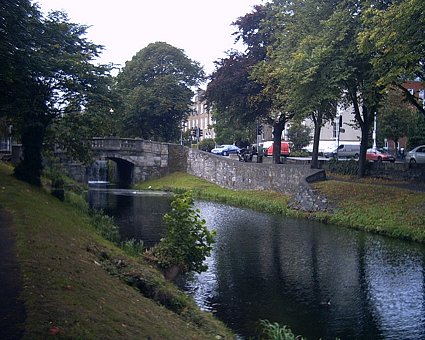 |
| Grand Canal Copyright irishkc.com |
Thursday, March 10, 2011
Massive investment for flood protection in England

Saturday, March 5, 2011
Science Spin March 2011

Wednesday, March 2, 2011
Water Quality in Ireland 2007-2009
The season for National reports continues with the latest report on the surveillance programme of Irish water quality dealing with rivers, lakes, estuaries and groundwaters has been published by the Environmental Protection Agency. The report Water Quality in Ireland 2007-2009 can be downloaded from the EPA website.
The programme monitors some 13,118 km of river channel comprising 1,700 rivers, as well as 222 lakes, 89 estuarine and coastal sites and 211 groundwater monitoring stations. The problem with all such surveillance programmes is that not all water bodies can be included so there are many gaps in what is being monitored. However, having said that, the overall conclusion is that water quality in Ireland is being maintained but according to the EPA themselves the quality of Irish water quality remains only just above the European average which is disappointing. The reports shows that 70% of river channel is of good quality status in accordance with the Water Framework Directive although the remainder are polluted to varying degrees. Overall, 85% of groundwaters were also of good status and 90% of lake area is in a satisfactory condition. The EPA remain committed to improving water quality in Ireland.
The programme monitors some 13,118 km of river channel comprising 1,700 rivers, as well as 222 lakes, 89 estuarine and coastal sites and 211 groundwater monitoring stations. The problem with all such surveillance programmes is that not all water bodies can be included so there are many gaps in what is being monitored. However, having said that, the overall conclusion is that water quality in Ireland is being maintained but according to the EPA themselves the quality of Irish water quality remains only just above the European average which is disappointing. The reports shows that 70% of river channel is of good quality status in accordance with the Water Framework Directive although the remainder are polluted to varying degrees. Overall, 85% of groundwaters were also of good status and 90% of lake area is in a satisfactory condition. The EPA remain committed to improving water quality in Ireland.
Subscribe to:
Posts (Atom)